
Creating opportunities for Native American youth and young adults to gain the skills and knowledge needed to live in a manner consistent with the cultural values of self-reliance, ecological balance and peaceful co-existence by reviving local food economies, restoring ecosystems and promoting healthy lifestyles through education, design and implementation.
Announcing the SEEDS School Garden Instructor training program beginning next spring in 2024.
We are currently raising funds to hire and train up to eight young adult Native Americans for a new and vital position in pre-k to 12th grade education – School Garden Instructor (SGI). These will be full-time career jobs with each SGI assigned to a particular school in the Navajo Reservation communities near Window Rock, Arizona.
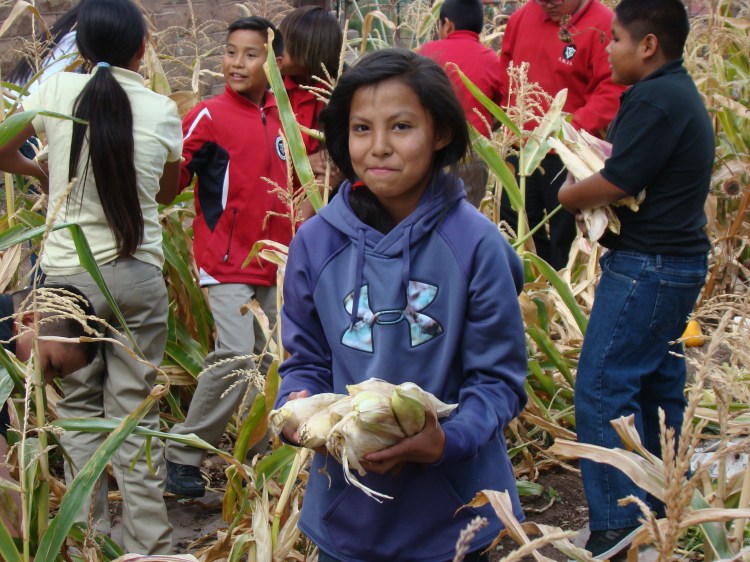
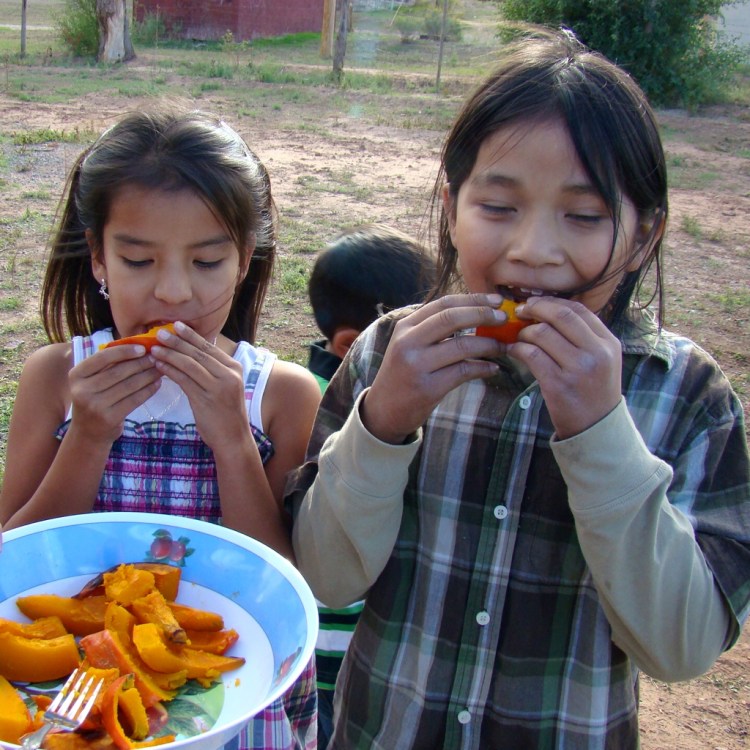
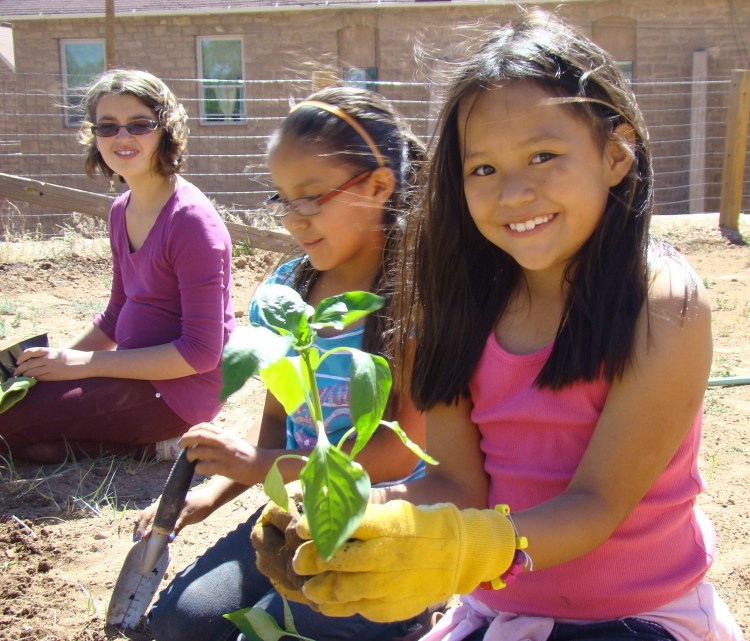
School gardens can lead the way to a transformational shift in our educational system and in the ways we come together and function as a community. Properly managed school and community gardens can foster localized economic abundance through ecologically balanced and sustainable models of food production, while creating naturally beautiful spaces for people to reconnect with Mother Earth and one another. The benefits include improved mental, emotional and physical health and academic performance as well as promoting biodiversity and environmental restoration.
It takes time, dedication and specific knowledge and skills to establish a successful gardening program as an integrated part of school culture and curriculum. Classroom teachers typically do not have the time, training or experience for this. Most attempts at starting a school garden are abandoned within a year or two. Very rarely do any grow the quantity of food needed to have an impact on improving students’ health and nutrition, regenerate soil or create attractive natural spaces for peaceful contemplation.
There are several young adult Navajos we know who have a passion for gardening and strengthening their community, and a desire to share their passion with students and teachers in an outdoor educational environment. This would be a dream job for them, but they need to be paid.
In the beginning, our SGI trainees will be working together as a team at Saint Michael Indian School in Saint Michaels and at the greenhouse and garden at the Good Shepherd Mission in Fort Defiance. After a few months of training they will each be assigned to another school in the area. These other schools have had garden programs in the past that were begun with enthusiasm, then struggled and then abandoned. We will also be working together as a group at these schools to do some initial design and set up work, and meet together on a regular basis for further training, discussion and to support each other.
Because funding a new position is difficult for schools, SEEDS anticipates the need to continue paying our SGIs and providing technical support as part of our ongoing mission. Within a few years, a significant portion of their salaries could come from income generated by the program itself such as a student run farmers market and “value added” products produced in a home economics kitchen classroom.
Training for our school garden instructors will include the following components:
• Fundamentals of organic gardening and permaculture principles and methods.
• Working with teachers to integrate garden activities into classroom curricula pertaining to all subjects (preschool to high school.)
• Nature therapy – creating outdoor environments to facilitate emotional, spiritual and psychological healing through reconnecting with Mother Earth. In Diné culture this is The Beauty Way or Hozho – peace, beauty, balance and harmony.
• Setting up a summer school garden program to maintain the garden during the period when normal classes are on break – a great time for engaging parent participation.
• Landscaping with edible native plants as a source of traditional food, habitat for native birds, reverse soil erosion and build topsoil. And to bring more beauty and harmony into the surrounding school environment.
• Working with the school’s buildings & grounds staff in helping maintain the garden and edible native landscaping.
• Working with the school’s food service personnel to get food from the garden into the meals that are being served in the cafeteria.
• Managing composting and recycling/waste-reduction programs.
• Designing and implementing rainwater harvesting systems integrated into landscape, gardens and orchards.
• Managing a passive solar-heated greenhouse for winter food production and springtime seedling production for summer gardens.
• Implement and manage a restorative grazing program with a small flock of sheep (at schools that have an appropriate land area.)
Your contribution makes this important program possible.

Thank you for your support
 Sunrise Ecological Education & Design Services